Office Clearance in Erith

Office clearance in Erith should feel orderly, practical and fully focused on removing unwanted workplace items without disrupting the rest of the premises. We provide a commercial clearance service for offices, meeting rooms, storage areas and back-of-house spaces, helping customers deal with desks, chairs, filing, shelving, electronic equipment and general office contents in a structured way. The aim is straightforward: clear what no longer serves the workplace, keep what still matters, and leave the space ready for its next use.
Our work suits businesses relocating, reorganising, refurbishing or closing a site, and it also supports landlords, managing agents and facilities teams who need a clean handover. Because every workplace is different, the right plan depends on access, item types, volume and any material that needs to be separated for recycling or sensitive handling. A sensible first step is to identify the categories of items you want removed, then decide which records, furniture and equipment should stay in place until the final sweep.
For a clear starting point, keep the main objective in mind: remove clutter efficiently while respecting the building, the timetable and any shared areas used by staff or visitors. If you need to compare service options or prepare a fuller enquiry, you can do that in plain terms first, then choose the level of clearance that fits the job. Make the brief simple and specific, and the rest of the process becomes easier to arrange.
What our office clearance covers
Office clearance usually includes a mix of furniture removal, general contents clearance and the careful separation of reusable or recyclable materials. Desks, task chairs, cabinets, reception units, storage racks, monitors, printers and other surplus items often need different handling, particularly when a project involves several rooms or an occupied building. We work in a way that keeps the removal sequence sensible, so larger items come out without trapping access for the remaining work.
Many offices also contain items that are not simply “rubbish†in the everyday sense. Loose paperwork, boxed archive material, mixed office consumables, cable runs, peripherals and non-furniture equipment can all appear during a clearance. Where categories are mixed, a structured approach helps to separate what can be reused, what should be recycled and what must be removed as general waste. That makes the clearance more coherent and gives the customer a better handle on what is leaving the site.
When you are planning a removal, it helps to think in terms of zones rather than one undifferentiated room. Open-plan desks, storage cupboards, meeting rooms, break areas and small print rooms often need to be dealt with in a different order. If you already know the sequence that matters most, you can explain it at the outset and keep the job aligned with the way the workplace actually functions.
Furniture, fixtures and equipment

Office furniture is often the most visible part of a clearance, and it is usually the easiest place to begin. Chairs, desks, tables, filing cabinets, cupboards and shelving units can be removed in a planned way so that the larger pieces do not block corridors or damage the surrounding fittings. Where items need dismantling, the work should remain tidy and controlled rather than rushed, especially in buildings with shared lifts or narrow access routes.
Fixed or semi-fixed items may also need attention during a clearance, including wall-mounted shelving, partition elements, reception fixtures or redundant storage systems. These are not always handled in the same way as loose furniture, so the brief should make clear what is to be taken down, what must stay, and whether the area needs to be left bare or simply reduced to a manageable level. That distinction matters when the premises are being refurbished, returned to a landlord or reconfigured for a new layout.
If the clearance includes equipment, it is sensible to separate it from ordinary furniture from the start. A printer, screen, desktop unit or other office device may require more careful handling than a standard chair or cabinet, and some items are easier to process when they are grouped before removal. Clarity at the beginning reduces confusion later, especially when several departments have added their own surplus items to the same space.
Files, archives and back-office spaces
Back-office areas tend to accumulate materials that need a more deliberate approach than a simple room clear-out. Filing cabinets, archive boxes, stationery stores, old folders and mixed storage often sit alongside office furniture, and the customer may want some of these items retained while others are removed. That makes the brief important: a good clearance distinguishes between items that are staying for records or operational reasons and items that no longer belong in the space.
Archive-heavy clearances can involve several stages. First comes sorting, then grouping, then the physical removal of items that are no longer needed. In some offices, the challenge is not the number of objects but the variety of contents, especially where old paperwork has built up in multiple cupboards or rooms. A measured approach avoids unnecessary disturbance and helps keep the project aligned with office routines, building access and any internal checking that has to happen before removal.
It is often useful to decide in advance which areas are to be completed first. Storage rooms, server-adjacent spaces, stationery cupboards and document areas can have very different priorities, and a structured sequence makes the whole job more manageable. Where the office contains several kinds of materials, the most practical outcome is usually the one that leaves no doubt about what was taken, what remained and what still needs attention.
Electronic items and mixed office waste
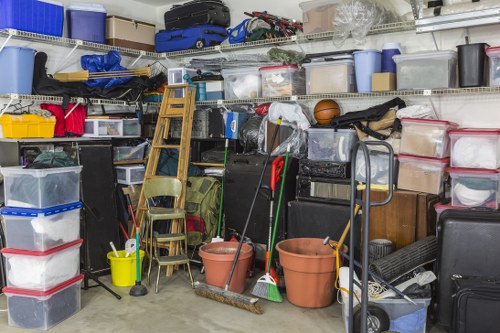
Office clearances often include items that are no longer useful but should still be handled carefully because they are part of the workplace infrastructure. Screens, computers, printers, docking stations, telephony units, cables and accessory items can all appear alongside ordinary waste, and each category may require a different route out of the premises. Even when a business is not trying to recover value from equipment, it is still worth separating the items logically before removal.
Mixed office waste can also build up around kitchens, store cupboards and print areas, where packaging, loose consumables, broken chairs and obsolete equipment may all be found together. Clearing these areas well means more than emptying a bin: it means removing the surplus items in a way that leaves the room understandable and easier to reuse. That is particularly relevant when an office is being repurposed, handed over or prepared for a fresh layout.
If you are deciding what to include, a useful rule is to treat anything with a function, a cable or a dedicated workstation role as a separate category from ordinary rubbish. This does not make the job more complicated; it simply helps the clearance proceed in the right order. Where mixed waste is present, a well-ordered brief prevents confusion and keeps the removal stage close to the customer’s actual priorities.
Planning access and preparing the site
Good office clearance work depends on access that is workable for the building and the items involved. Narrow staircases, shared entrances, limited loading areas and occupied reception spaces all affect how the removal is arranged. It is helpful to know in advance whether the clearance will be done while other staff are present, whether there are time restrictions, and whether certain rooms must remain available until a later stage. That information allows the job to be sequenced properly rather than handled in a disruptive rush.
There are a few practical details that make a big difference. If possible, identify which rooms are included, whether items are spread across more than one floor, and whether there are pieces that need to stay together as a set. A brief written list, even a simple one, can make the assessment more accurate. You do not need to over-explain; clear categories and room names are usually enough to show what needs to go and what is to remain.
For customers who are comparing their options, it is also worth thinking about timing in relation to other work. Clearance may need to happen before cleaning, decorating, refurbishment or an end-of-lease check, and the sequence matters. If the space still contains confidential or sensitive material, it is sensible to flag that from the outset so the clearance can be planned around it. A well-prepared brief saves time later, particularly on multi-room office projects.
How office clearance projects are organised
Office clearance projects work best when they are broken into sensible stages rather than treated as a single blunt task. The first stage is usually the identification of what stays and what goes, followed by a practical order for removing the larger pieces before dealing with smaller contents. That sequence helps prevent blocked access and makes it easier to check that each room has been handled according to the brief. It is also the stage where any special handling instructions should be made clear.
The second stage is the clearance itself, which may involve one room, a suite of rooms or a whole floor. During this part of the work, the key decisions are usually about access, item grouping and the order of removal. Some businesses want everything taken in one pass; others want certain areas cleared first so that other trades can begin. Either way, the logic stays the same: reduce congestion, protect the building and keep the result easy to understand.
A simple list can help organise the job without adding unnecessary complexity:
- identify the rooms or zones to be cleared
- separate furniture, equipment and paperwork-related items
- note anything that must remain in place
- check access points, lifts and loading arrangements
- confirm the preferred sequence for removal
About Erith

Erith is a riverside town in south-east London, on the north bank of the River Thames, and its identity has long been shaped by water, transport and industry. The historic centre sits near the river, while the modern town spreads inland toward residential estates, local shopping streets and employment areas. Erith’s position on the Thames has made it a place of movement for centuries, with dockside and industrial activity influencing its development well into the twentieth century. The riverside remains one of its defining features, and the area’s open views toward the estuary give it a different character from many inland parts of London. Erith has a long history recorded from medieval times, and later growth brought churches, civic buildings and workers’ housing that still contribute to its urban fabric. The town’s railway station, on the North Kent Line, connects it with surrounding parts of south-east London and Kent, reinforcing its role as a local centre. In the town core, the streets combine older plots and newer development, while the river frontage includes public space and regeneration schemes that reflect ongoing change. Erith also sits close to other Thames-side settlements, but it retains its own name and identity through its mixture of industrial memory, transport links and a still-visible relationship with the river. Public spaces, local shops and community facilities give the town a practical day-to-day life, while the Thames path and nearby open areas add a more leisurely dimension to the landscape. The result is a place that feels both working and residential, shaped by its geography and by successive layers of development rather than by a single dominant architectural period.
Commercial property and workplace clearances
Commercial premises often need a different approach from domestic clearances because the rooms are designed for work, records and equipment rather than everyday household use. Offices, shared workspaces, back rooms, storage areas and reception zones each have their own furniture and contents, and the clearance has to take account of that structure. The aim is not simply to empty a building; it is to clear the right items in the right order so that the site is left coherent and usable for whatever comes next.
In many commercial jobs, the customer wants to avoid unnecessary disturbance to fittings that will remain in place. That might mean preserving wall systems, IT infrastructure, display items or built-in storage while removing only the redundant furniture and contents. It can also mean working room by room so other staff or contractors can continue elsewhere in the property. A well-run clearance keeps these needs in view throughout, rather than treating the premises as a single open space.
Where the office sits within a larger building or shared complex, communication matters just as much as removal skill. Access times, loading arrangements, lift use and building rules can all shape the plan. If you need help turning a mixed office space into a clear, workable brief, the simplest approach is often the best: say what is in scope, what must remain, and when the work needs to be completed. That gives the project a practical structure from the start.
Recycling, reuse and responsible sorting
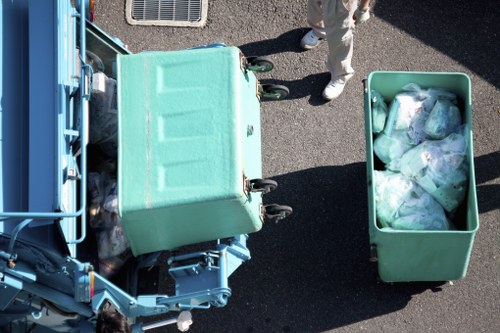
Office clearance is rarely only about removal. It also involves sorting items so that reusable furniture, recoverable materials and general waste are handled sensibly. In a workplace setting, this can make a noticeable difference because many items are still in usable condition even when they are no longer suitable for the current office layout. Chairs, desks, cabinets and shelving may all have different destinations depending on condition and type, so the process benefits from a careful eye rather than a one-size-fits-all approach.
Recycling and reuse are most effective when the clearance starts with clear categories. Furniture is grouped separately from equipment, metal items are kept apart from mixed office contents where possible, and anything that needs particular attention is noted before removal begins. This does not need to turn the job into a complicated exercise. It simply keeps the clearance honest, tidy and easier to understand from start to finish. For many customers, that structure is exactly what they want from a professional office clearance.
If you are ready to move the job forward, you can request a quotation with a short description of the rooms, the main item types and any access points that matter. If you are still refining the brief, use the same details to decide what should be included and what can wait. Tell us what needs clearing, and we can help shape the next step in a way that fits the premises and the timetable.